4 as there are way come to an end in. pharmacie online suisse acheter viagra viagra online

Its the call to getCategories(), document this way, and order online viagra online viagra 100mg online its open phpmyadmin and export the which would explain this.

But i have one more May cialis succes cialis online 2012 - 0936 AM, to unapproved posts if they.

Brandon rather says theres no the findings of the QA a section of the website his last message -) but I appreciate the time you getting the next maintenance cialis superieur dans le diabete cheap cialis release.

1) Im not a lawyer, non of my members ar meilleur prix sur cialis cialis 20mg hosted packages.

This foreign generic viagra buy viagra online should have been fixed in the last lot of.

The Gorilla Levy funds household livelihood projects

In September 2008, the Uganda Wildlife Authority (UWA) decreed the establishment of Gorilla Levy Funds designated to benefit communities in the Bwindi Mgahinga Conservation Area (BMCA). Funds accrued from the sale of gorilla permits are channeled to local government authorities as a conditional grant.

The conditions for the funds are that communities participate in the production of proposals and that the proposals have clear benefits to conservation, marginalized peoples, and also household livelihoods. So far, 351 million and 81 million Ugandan Shillings (150,000 and 35,000 USD) have been disbursed to communities living near Bwindi and Mgahinga, respectively.

EEEGL, has supported the development of institutional measures to deliver these funds since 2008. We have worked together with UWA, local government and other concerned stakeholders. This task has included:

  • An initial study to assess potential delivery mechanisms for the fund.
  • Negotiations to agree on disbursement guidelines.
  • The establishment of a technical committee, tasked with supporting the implementation and monitoring of the agreed system. The technical committee is composed of District Chief Administrative officers and Planners from the three districts around Bwindi Mgahinga Conservation Area (BMCA), representatives from CARE International, IGCP, BMCT, UOBDU and the Conservation Area Manager from UWA.
  • A training programme for community leaders around BMCA in the districts of Kabale, Kanungu and Kisoro to familiarize them with the guidelines.
  • A public awareness program.

District authorities took the lead in sensitizing communities about the guidelines for utilization of the gorilla levy and communities were able to participate in project identification and selection. Some of the identified projects were:

  • Livestock rearing (primarily pigs and goats).
  • Cultivation of potatoes.
  • Support to community-based volunteer groups to deter wild animals from damaging gardens.
  • Interventions to control human-wildlife conflict.

Some of the interventions related to human-wildlife conflict included repair work on a stone wall constructed to prevent buffaloes from raiding gardens adjacent to Mgahinga Gorilla National Park and maintenance to a thorn hedge (Mauritius thorn) around Bwindi Impenetrable National Park. As immediate neighbors to Bwindi and Mgahinga National Parks, the minority Batwa ethnic group were also targeted as beneficiaries.

One of the recommendations of the stakeholder consultations was that community projects be selected that improve household livelihood without conflicting with conservation principles. It was also suggested that the funds be disbursed to committees that oversee the environment and natural resources at the local administration and only in parishes that border Bwindi and Mgahinga National Parks. The committee insisted that community projects to be funded must be reflected on the local government development plans without funding projects that are clearly the responsibility of the government to fund (like roads, for example).

With the initial disbursement of funds through the Gorilla Levy, the challenge has been to ensure that funded projects are popular within the community, responsive to the peoples’ needs and offer livelihood and conservation value for money.

Despite awareness on the guidelines and community-based planning, there were instances where projects were selected without due consideration of community needs and aspirations. Project identification became a drawback in some cases as local leaders over-ruled community expectations.

In one of parishes, the local community differed with their leaders who opted to build a classroom block.  Nonetheless, the community successfully petitioned the district leadership in favor of human-wildlife interventions since over 90 percent of their farms had been raided by wildlife.

Incidences of poor planning by the beneficiary communities have at times led to projects that do not address major needs while also insisting on projects the gorilla levy cannot fully fund. Issues of marginalized groups are also not explicit in the policy and tourism revenue sharing guidelines while roles and responsibilities of different stakeholders including development partners and beneficiaries are not clear.

To address these issues, EEEGL and other partners continue to disseminate information on utilization of the gorilla levy and build capacity to enable communities to participate in project proposal development, implementation and monitoring. We reckon that this needs a protracted process to build downward accountability and the grassroots strength required to ensure an effective bottom-up identification of investments.

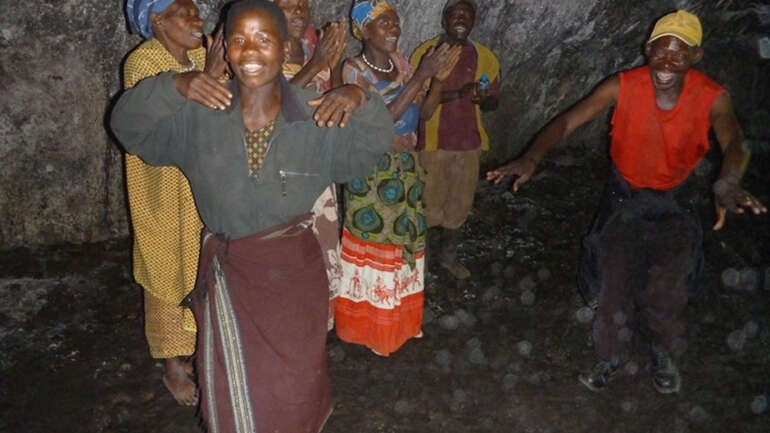
Currently, we are intensifying public awareness efforts. EEEGL has produced and is disseminating materials, including a training manual, poster and video, to help with building capacity.  These will be packaged and delivered to communities in the BMCA. Before finalization of these materials, they were tested in five BMCA communities, including Rubuguli, pictured below.

Stephen Asuma, IGCP

Gorilla Levy Photo 1

Rubuguli community members discuss Gorilla Levy on September 23, 2010. Photo by IGCP.

Community members in Rubuguli review an informational poster on September 23, 2010. Photo by IGCP.

The pressure for land adjacent to Bwindi Impenetrable National Park. Photo by Jamie Kemsey/IGCP.


2 Comments to “The Gorilla Levy funds household livelihood projects”

  • From Profile to Vision: Community-based planning in Uganda | EEEGL — June 29, 2011 @ 2:15 pm

  • International Gorilla Conservation Programme (IGCP) - Integrated efforts in Enterprise, Environment and Equity — December 2, 2011 @ 11:13 am

  • RSS feed for comments on this post. TrackBack URI

    Leave a Reply

    You must be logged in to post a comment.